Every student has had this moment.
Exams are two weeks away. The syllabus is long. The textbook that felt manageable in June now feels like a different document entirely. And somewhere between chapter five and chapter eight, the motivation just goes.
It is not laziness. It is not that the student stopped caring.
It is that studying alone, with only a textbook and a notebook, is genuinely hard. When something does not make sense, there is no one to ask. When a chapter feels unclear, re-reading it produces the same confusion in a different order. There is no structure. No feedback. No way to know if what you understood is actually correct.
That is the problem. A digital study kit is the answer to it.
Not more content to wade through. A complete, structured way to learn, revise, and prepare at home, on the student’s own schedule, without needing a tutor or a parent who still remembers every chapter of Class 9 Science.
What Is a Digital Study Kit?
Not an app. Not a folder of downloaded videos someone put together.
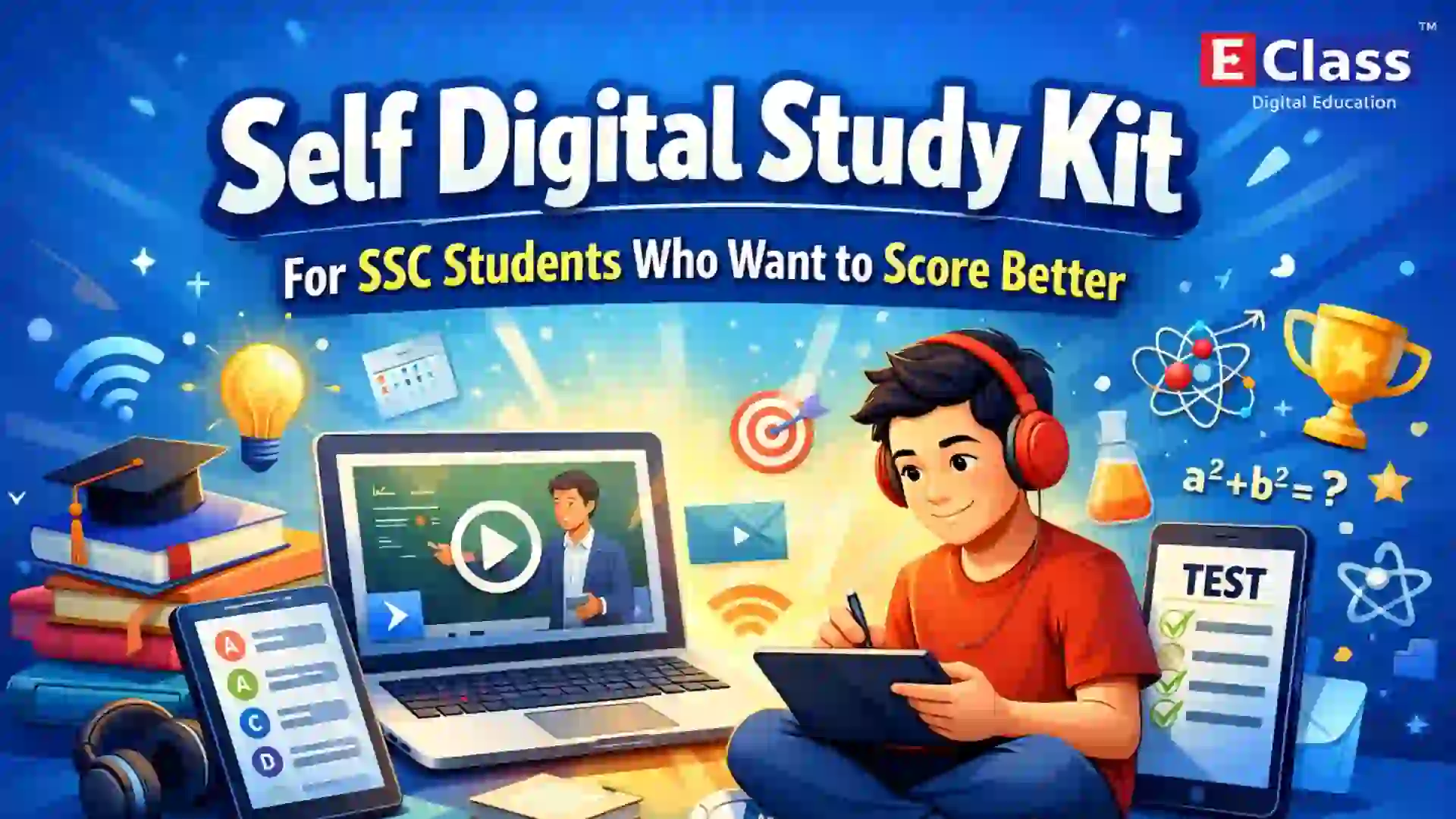
A digital study kit is a complete, self-contained learning package built for home use. It brings together everything a student needs for the full academic year in one place. Animated chapter videos. Mind map revision tools. MCQ practice sets. Question and answer guides. Chapter notes. Organised by subject and chapter. Aligned to the exact syllabus the student is being examined on.
The best ones come pre-loaded on a device, SD card, or pen drive.
No internet required. No buffering. No accidentally ending up watching something completely unrelated when the plan was to study Chemistry.
One kit. Everything inside it. Ready when the student is.
Who Is It Actually For?
The obvious answer is students who are struggling. And yes, it helps them.
But that is only part of the picture. A digital study kit is equally useful for:
- A student who understood the chapter in class but wants to make sure before moving on
- A student revising for exams who needs structure, not just more material to read through
- A student who missed school and needs to catch up without burdening their teacher
- A student whose parents want to support their learning at home but cannot always explain every subject
- A student who wants to get ahead on chapters before they are introduced in class
Class 4 or Class 10. Strong student or struggling one. The need for reliable, structured, home-based learning is the same across the board.
What a Proper Digital Study Kit Contains
This is where the difference between a good kit and a mediocre one becomes obvious.
Animated Chapter Videos
The foundation of everything.
Every chapter, every subject, explained through animation that follows the student’s actual textbook. Not general content. Not borrowed from a different Board. Built specifically around the syllabus the student will be examined on.
Why does animation matter? Because reading about how the digestive system works and watching it happen are two different experiences entirely. One is abstract. The other is immediate, visual, and far more likely to stay beyond the exam.
Mind Map Videos
Short. Focused. Built for one purpose.
A mind map video covers the essential points of an entire chapter in a few minutes. Not a replacement for the full lesson. A reinforcement of it. The night before an exam, a five-minute mind map is worth considerably more than an hour of anxious re-reading.
Question and Answer Videos
Here is something most students discover too late.
Understanding a concept and being able to answer an exam question about it are not the same skill. Many students know the answer. They cannot write it in a way that earns full marks.
Q and A videos close that gap. They walk through important chapter questions and show exactly how to construct a response. What points to include. How to frame it. What the examiner is looking for. That skill alone can shift results.
MCQ Practice Sets
Chapter-wise, subject-wise multiple choice questions.
The value is immediate, honest feedback. A student who gets a question wrong finds out now, not four days later when homework is returned. They go back to the relevant segment of the chapter video. They fix the gap before it becomes a pattern.
Self-testing is one of the most effective revision methods there is. A digital study kit builds it in automatically.
PDF Notes and Chapter Summaries
Concise. Organised. To the point.
Useful before a class test. Useful for students who prefer reading alongside video. Useful when a specific detail needs to be checked quickly without rewatching an entire chapter.
Offline Access
Worth stating plainly.
A kit that needs internet will not always work when a student needs it. Pre-loaded content means studying at 10 pm is as straightforward as studying at 4 in the afternoon. No signal. No data. No interruptions.
Why It Works Better Than Studying the Traditional Way
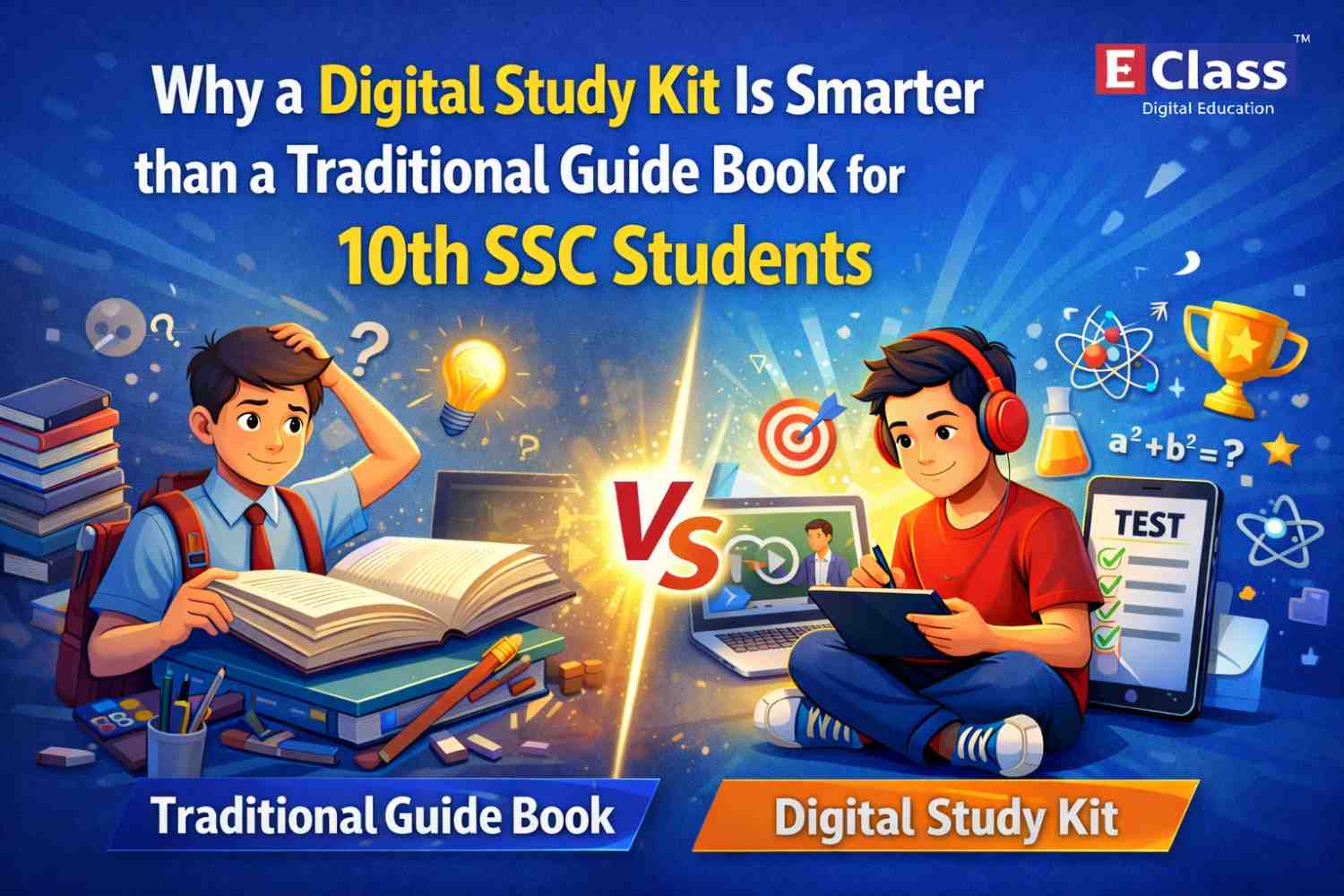
Most students study the same way. Read the chapter. Write notes. Re-read before the exam.
It feels productive. It rarely produces strong retention, especially under exam pressure. Because it is passive. The information goes in. Some of it stays. Most of it fades faster than it should.
A digital study kit makes studying active. That changes the outcome.
Watch a video. Pause when something clicks. Rewind when it does not. Test yourself with MCQs. Note what came out wrong. Go back to that specific part. Watch the mind map before the next session to consolidate what was covered.
That cycle is how information moves from something vaguely recognised to something genuinely known. It is how the brain actually learns. And a digital study kit builds that cycle into the routine without the student having to design it themselves.
How to Use It Well
Having the kit matters. Using it with intention is what produces results.
The day a chapter is taught in school
Come home and watch the chapter video that evening. Same day. While the lesson is still in the head.
Twenty minutes. That one habit, done consistently through the year, does more for exam preparation than any amount of last-minute cramming. This is not an exaggeration. It is just how retention works.
When starting a new chapter
Watch the video before opening the textbook. Get the visual picture first. Then read.
The chapter will feel familiar rather than completely new, and following the text becomes considerably easier when the brain has already seen the shape of it.
During regular revision
One mind map video per chapter in the weeks before exams.
Not re-reading. Not rewriting notes from scratch. A focused few minutes that covers everything important. Faster, more organised, and more effective than most revision habits students default to.
Before a test
MCQ practice for the relevant chapters. Every wrong answer is a pointer. Go back to that part of the chapter video. Rewatch it. Try again.
This targeted approach is far more efficient than reading the whole chapter from the top and hoping the right things stick.
For subjects that feel difficult
Spend extra time with the Q and A videos. Not just for the answers. For how answers are constructed. Students who know how to frame a response consistently outperform those who know the content but cannot get it onto the page clearly.
A Weekly Routine That Is Actually Sustainable
A digital study kit gives the best results when it is part of the week, not something grabbed in a panic before exams.
Here is a structure that works without feeling like extra punishment:
Monday to Friday Watch the chapter video for what was taught that day. Twenty minutes. Just that.
Saturday Review the week. Mind map videos for everything covered. MCQ practice for two subjects.
Sunday Rest. Or spend thirty minutes on one chapter that felt shaky during the week.
Weeks before exams Structured revision. Chapters worked through systematically with mind maps. MCQ practice daily. Q and A videos for high-weightage chapters.
Students who follow something close to this stop panicking before exams. Not because exams become easier. Because the preparation has been building quietly all along.
A Word for Parents
Most parents want to be involved in their child’s studies. Most parents also cannot explain every chapter of every subject at every standard. That is not a gap in parenting. That is just reality.
A digital study kit handles the explaining. In the right language, the right order, matched exactly to what the school is teaching. Parents do not need to sit beside their child for every session. The kit is self-contained enough for students to work through independently.
And that independence is worth more than it first appears.
A child who learns to sit down, open the kit, work through a chapter, test themselves, and figure out where more work is needed is building a habit that carries far beyond school. Not just better results. A better relationship with learning itself.
Digital Study Kit vs Tuition
This comes up. It deserves a direct answer.
A good tutor who knows a student personally and can adapt in real time offers something valuable. No argument there.
But tuition is expensive. It is not always consistent. It depends entirely on one person’s availability and quality. And it happens at a fixed time, which means a student cannot access it at 10 pm when a concept suddenly stops making sense.
A digital study kit is available every hour of every day. It never cancels. It covers every chapter with the same quality every time. It costs a fraction of a year of tuition.
For most families, the honest answer is not one or the other. Use the kit as the foundation. Add targeted support where it is genuinely needed. That combination works better than either alone.
To Conclude
A digital study kit does not make studying effortless.
Nothing does.
But for a student who is willing to put in the time, it makes that time count for considerably more. Concepts understood, not just memorised. Revision that is structured rather than last-minute. Exam preparation feels like the result of steady work rather than panic.
That shift, from studying more to studying better, is exactly what the right kit makes possible.
E-Class digital study kits are built for Maharashtra State Board students from Class 1 to Class 10. Every subject, every chapter, completely offline, available in Marathi, Hindi, and English mediums.
Frequently Asked Questions
1. What is a digital study kit and how is it different from a regular study guide? A digital study kit is a complete home learning package with animated chapter videos, revision tools, MCQ practice, and chapter notes for every subject. Unlike a printed study guide, it is visual, interactive, and built around active learning rather than passive reading.
2. Does it follow the Maharashtra State Board syllabus? Yes, entirely. Every video, question, and note is aligned chapter by chapter to the State Board textbook. Students study exactly what their school expects them to know, in the right order, using the right terminology.
3. Does it need internet to work? No. Everything is pre-loaded on the device, SD card, or pen drive. Students can study anytime, anywhere, without Wi-Fi or mobile data.
4. Is it only useful for students who are struggling? Not at all. Struggling students use it to understand difficult concepts. Strong students use it to consolidate understanding and prepare systematically for exams. The kit is useful regardless of where a student currently stands.
5. How is it different from educational videos online? Online videos are general and unaligned to any specific Board or syllabus. A digital study kit is structured around the student’s exact textbook, follows the correct chapter sequence, and includes self-testing tools that online platforms do not offer.
6. Can a student use it without help from a parent or teacher? Yes. The content is self-explanatory and easy to navigate. Students work through chapters, test themselves, and identify gaps entirely on their own. Over time, that independence becomes one of the most valuable things the kit builds.
7. How much time does a student need to spend on it each day? Twenty to thirty minutes daily is enough to make a real difference across the year. Watching the chapter video after school and doing short MCQ practice a few times a week builds steady understanding without adding significant pressure to an already full school day.